TL;DR
- Automation repeats fixed steps. An AI agent works through jobs that need a decision at each turn.
- The deciding question is simple: does the work change from one run to the next?
- Agents cost more to build and run, so they're worth it only when the work genuinely varies.
- Most business work fits plain automation. A smaller slice needs an agent, and some shouldn't use AI at all.
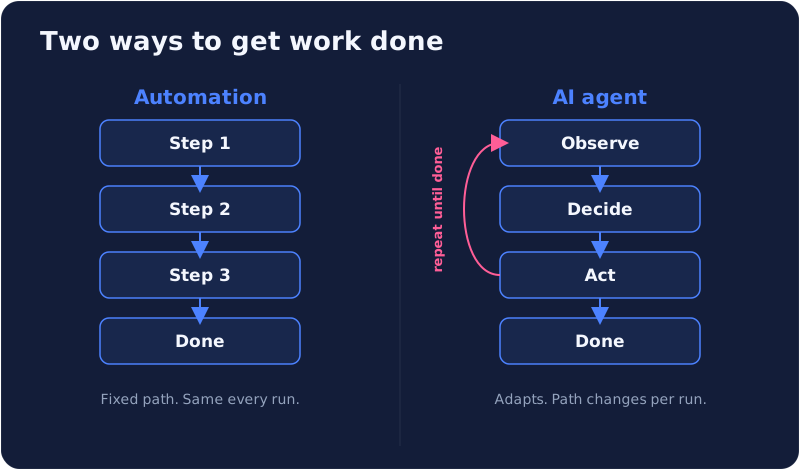
Automation runs the same fixed steps every time. An AI agent handles work that needs a decision along the way: it reads what's in front of it and picks the next move. The deciding question is whether the work changes from one run to the next. If it doesn't, automation is cheaper and sturdier. An agent earns its keep only when the work genuinely varies, and most businesses have less of that than they expect.
What automation handles best
Automation shines when work follows a set path. Moving data between two systems that don't talk to each other. Rebuilding the same report every Monday. Sending the same follow-up after every order. The steps never change, so a system runs them faster than a person and never forgets one. Most of the repetitive work that clogs a team's week lives right here, and most of it is a fit for straightforward AI automation. If you're trying to decide where to start, our guide to what to automate first walks through spotting those tasks.
What an agent adds
An AI agent takes on work that isn't a straight line. As AWS puts it, an agent is software that acts on its own toward a goal, connecting to your tools and systems to get things done rather than just answering a question. In practice that means it can gather information from several places, weigh what it finds, choose the next step, and carry a job through to the end. Andrew Ng describes these agentic workflows as ones that plan, use tools, and revise their work over several passes, instead of producing an answer in one shot.
That reaches work a fixed automation can't touch: pulling scattered research into one answer, or running a process whose next step depends on what it just found. The catch is cost. Agents take more to build, more to run, and more care to keep reliable.
A quick test
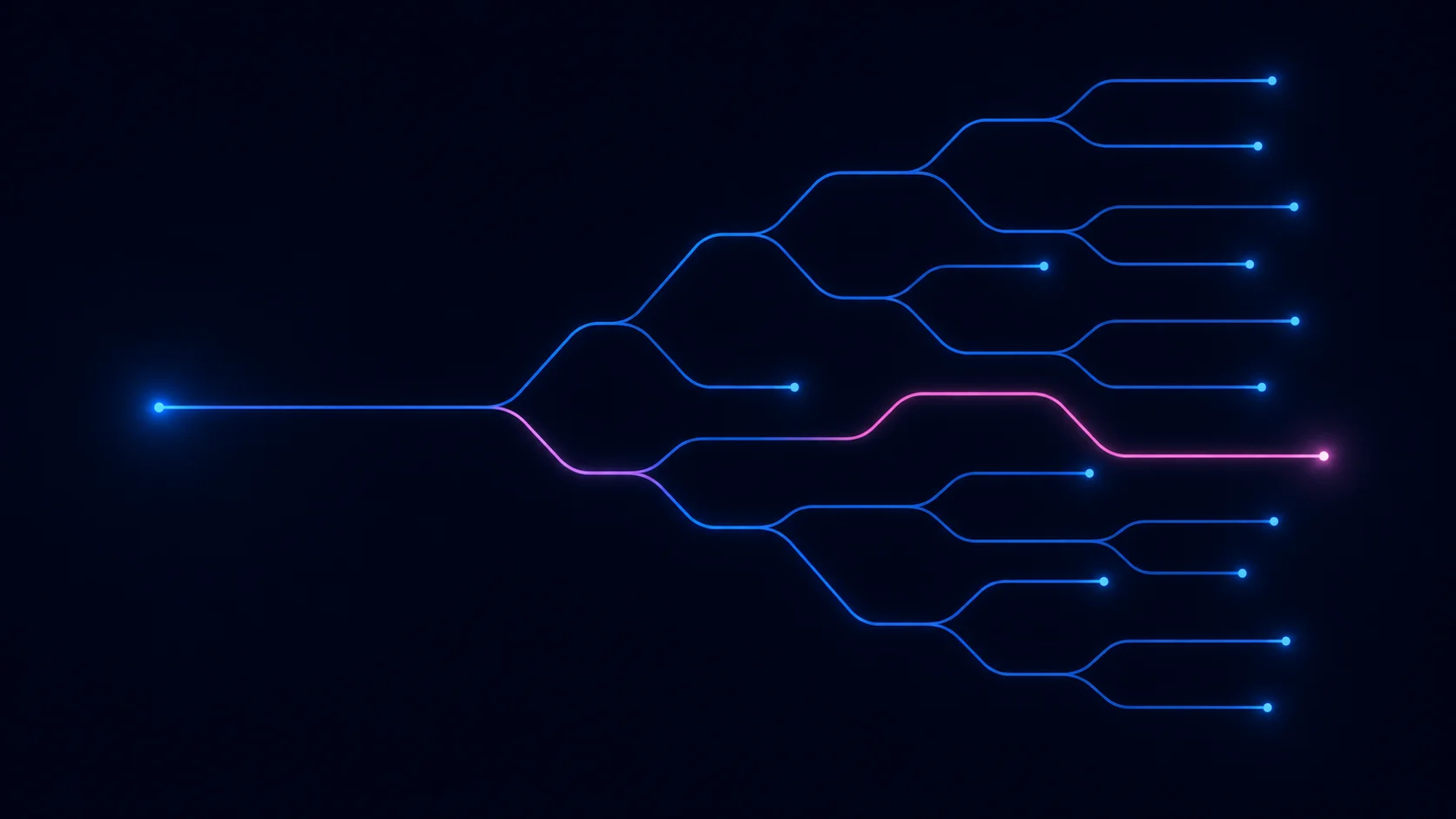
Ask one thing: does the work go the same way every time?
- Same way every time: that's automation. Clear steps, clear rules, nothing to decide in the middle.
- Next step depends on the last: you're edging toward an agent.
- A real judgment call on every pass: keep a person on it, because neither tool replaces that.
Most work sits in the first group. A true agent job is rarer than the hype suggests, and some work shouldn't go near AI at all.
Why picking the wrong one costs you
Build an agent for work a plain automation would handle and you pay more for less: a heavier build, higher running costs, and moving parts you didn't need. Anthropic's engineering team makes the same point from the builder's side, recommending the simplest solution that works and adding agentic complexity only when it clearly earns its place, because agents trade cost and latency for capability. Push it the other way and you get the opposite failure: force branching, multi-step work into a rigid automation and it snaps the first time reality strays from the script.
Most of the value in either one comes from matching the tool to the job. So we don't start with the tool. We start with the work: find what's worth improving, then choose what fits, whether that's an automation, an agent, or nothing yet.
They often work together
This isn't a pick-one-for-the-whole-company decision. The strongest setups tend to be hybrids: a fixed automation runs the predictable stretch of a process, and an agent handles the one step that needs a judgment call. You get the reliability and low cost of automation where the work is routine, and the flexibility of an agent only where you actually need it. Start with automation for the routine majority of a process, and reach for an agent only on the part that genuinely has to think. That keeps the cost and the complexity where they earn their place.
If you're not sure where your own processes fall, a Free AI Opportunity Assessment sorts it out with you: we look at how your work runs and tell you which pieces suit an automation, which might justify an agent, and which to leave alone.